

Helmet inspection guide: should you keep, monitor or replace? 

The safety performance of your helmet  may reduce over time, through damage caused by impacts such as a crash or dropping your helmet, and through general wear and tear. Ensuring a correct fit also contributes to safety performance of your helmet. 

A bicycle helmet is designed to absorb impact once. Even if it looks fine, damage can be invisible. Use this guide to decide whether a helmet should be kept, monitored, or replaced.
1. How old is the helmet?

Why it matters: Helmet materials (foam, adhesives, straps) degrade over time due to UV exposure, sweat, heat, and normal aging.

What to do:

Look inside the helmet for a manufacture date sticker. Most manufacturers recommend replacement every 5 years, even if unused.

Replace the helmet if:

  • it is more than 5 years old
  • the date is unknown and it shows noticeable wear.
2. Has the helmet been in a crash?

Rule of thumb: One crash = replace the helmet.

Crash history: Any impact where the helmet hit the ground, vehicle, or hard object. Even a low-speed fall or tip‑over counts. If you are unsure whether it was impacted, replace it.

Why?

EPS foam crushes to absorb energy and does not rebound, so damage may not be visible from the outside.

3. Inspect the outer shell

Look closely under bright light. If there is any crack or separation, replace the helmet immediately.

Check for:

  • cracks, fractures or splits
  • dents or soft spots
  • areas where the shell is separating from the liner
  • discoloration, brittleness, or flaking.
4. Inspect the inner foam liner (EPS)

This is the most critical safety component. If there is any noticable damage, replace the helmet.

How to inspect:

  • Look through vents
  • Gently pull pads aside
  • Press lightly around the liner (should feel firm and consistent)

Warning signs:

  • Cracks or compression lines
  • Crumbling or powdery foam
  • Loose or shifting liner
  • Soft or spongy areas
5. Check fit and shape

A helmet must sit correctly to protect you. Replace your helmet if it no longer fits snugly, the foam or padding has compressed too much or if the helmet shifts position easily when pushed while on your head. 

Proper fit check:

  • Sits level on the head (not tilted back)
  • Covers the forehead
  • Does not rock excessively front‑to‑back or side‑to‑side
  • Retention system still tightens evenly
6. Inspect straps, buckles and adjusters

Test the strength of the straps by fastening the buckle and pulling firmly. They should hold their position. 

Look for:

  • frayed, stretched, or torn straps
  • cracked or brittle buckles
  • slipping or broken retention dial
  • stitching coming undone.
7. Check padding and comfort components

Padding does not provide primary impact protection, but it affects fit and stability. Many pads are replaceable — worn padding alone does not require full helmet replacement unless it affects fit.

Check for:

  • flattened or missing pads
  • persistent odour or mould
  • pads detaching frequently.
Inspecting helmets
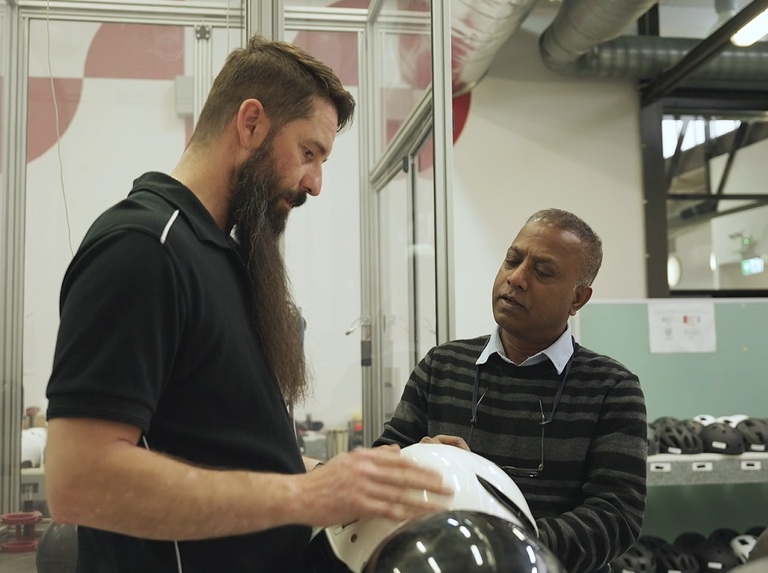
Technicians at Crashlab inspect a helmet after testing.